A curation of Faust Whale's peak experiences

Current company · 2025—

Friendshift

Assistive technology for being the friend you mean to be.

Modern communication gives us near-infinite access to one another while asking each person to remember, prioritize, initiate, and emotionally context-switch across dozens of relationships. Friendshift starts from a different premise: friendship is essential infrastructure, and maintaining it should not depend entirely on memory and willpower.

The first product is a minimal-screen-time, tap-to-call ritual. A physical near-field communication tile cues outreach; the system recommends one person based on the cadence the user wants for that particular relationship. An emerging insight layer maps how relationships function and feel across six dimensions: resonance, reciprocity, vulnerability, values, allure, and access.

  • 100+ interviews and surveys
  • 93% say easier maintenance would help
  • Founding alpha in development

X, the Moonshot Factory · 2020—2021

Qi: a maskless face mask

A maskless face mask that delivered filtered air to the mouth and nose without touching the face.

At X, I proposed and led an investigation into personal air pollution exposure. I assembled a multidisciplinary team, built and tested successive prototypes, and ran scrappy experiments in an airtight shed surrounded—somewhat inexplicably—by tens of thousands of gallons of liquid nitrogen.

The system used carefully directed airflow, including the Coandă effect, to create a protected breathing zone. Testing demonstrated as much as a 90% reduction in respired particulate matter. The work became United States Patent Application US20220016446A1, “Delivering an Airflow to a User.”

  • Up to 90% particulate reduction
  • Multidisciplinary prototypes
  • Published patent application

Independent research · 2021—2023

Interspecies translation

An early exploration of real-time translation between dogs and people.

With animal behaviorist Dr. Con Slobodchikoff, I explored a system for collecting the visual, aural, and chemical signals dogs use to communicate. The goal was not novelty speech synthesis; it was a practical interface that could help people identify distress, injury, disease, and behavioral needs more precisely.

We specified a multimodal recording rig and a roughly two-year data-collection path toward a minimum viable product. I ultimately stopped self-funding the project after a strategic disagreement, but it remains part of a broader fascination with non-human language, bioacoustics, and the limits of translation.

  • Multimodal sensing concept
  • Two-year data plan
  • Animal-language research

Young inventor · 1999—2005

Needle Beetle

A tactile ritual designed to reduce the pain and fear surrounding needles.

Later, interviews with children at a Pittsburgh hospital revealed that needles were almost universally the worst part of care. NeedleBeetle paired a washable stress-ball-like toy with a procedure that distracted patients, stabilized veins, and encouraged them closer to the skin. Licensed with Mattel through By Kids for Kids, it reached nearly 200 hospitals; 5,000 units were donated to sick children as part of the agreement.

  • Nearly 200 hospitals
  • 5,000 units donated
  • Licensed through By Kids for Kids

Community systems · ongoing

Gatherings as prototypes

Forums, rituals, and designed experiences for curious people.

At Stanford, I cofounded and led the Stanford Transhumanist Association, which grew into the world’s largest student futurist group. Its Advancing Humanity Symposium brought together competing perspectives on emerging technology rather than prescribing a single future.

That instinct continues through thematic gatherings, listening parties, collaborative salons, and the Los Angeles Social Connection Forum: environments where a carefully composed group can challenge assumptions, generate surprising ideas, and leave more connected than they arrived.

  • Hundreds at annual symposium
  • Cross-disciplinary programming
  • Social Connection Forum

Young inventor · 1998

PaceMate

A simpler way to transmit pacemaker and electrocardiogram signals over a phone line.

At eight, I designed PaceMate after watching my mother struggle to transmit pacemaker and electrocardiogram signals over a phone line. Electrolyte-soaked sponges, elastic wristbands, and a simpler physical arrangement improved both signal quality and ease of use. In 1998, the project made me the youngest inductee into the National Gallery for America’s Young Inventors.

  • Designed at age eight
  • National young-inventor recognition
  • Youngest National Gallery inductee

Expanded working copy

Source archive

Verbatim material gathered from accelerator applications and project documents for subtraction and refinement.

Stanford Transhumanist Association

Accelerator application

As co-founder and president of the Stanford Transhumanist Association, I grew it into the world’s largest student-run futurist group. With an $8,000 annual budget — less than one-tenth of what the Stanford Speakers Bureau spent on a single speaker — we hosted weekly meetings, free public talks, and the annual Advancing Humanity Symposium, which drew hundreds of attendees and featured nine speakers on emerging and speculative technologies.

I chose this example because it shows I can create momentum under constraints: with a small budget, we built a high-density intellectual community both in person and online, brought world-class visionaries to campus, and helped seed other futurist groups. It was also one of the most formative periods of my life, with unusually high personal and intellectual return on the time I invested.

Pacemate

YC application

In 1998, I won the Student Ideas for a Better America nationwide competition for Pacemate; my first invention improved the conductivity and transmission of electrocardiogram signals over phone lines for pacemaker and defibrillator users during remote battery checks. I later became the youngest inductee in the National Gallery for America’s Young Inventors.

Open source ↗

StartX application

Age 8: I noticed how burdensome my mom’s remote pacemaker battery checks could be. If the hospital called while my brother and I were at school, she sometimes had to manage the check alone, with too few hands to make it easy or low-stress. I noticed that electrocardiogram signals sent over phone lines could weaken before reaching clinicians, so I invented Pacemate to improve usability as well as conductivity and signal transmission. In 1998, it won the Student Ideas for a Better America nationwide competition, and I later became the youngest inductee in the National Gallery for America’s Young Inventors.

Needle Beetle

YC application

In high school, I licensed my second invention, Needle Beetle, to Mattel through By Kids For Kids. It reached 180 hospitals nationwide, reducing children’s procedural pain and distress during venipunctures — such as blood draws or intravenous placements — through a tactile ritual that enabled somatosensory distraction. Like Friendshift, this invention demonstrated that small, physical rituals can make difficult necessities easier.

Open source ↗

StartX application

Age 15: Wanting to help other sick kids more, I interviewed children at Children’s Hospital of Pittsburgh and found that the vast majority disliked the pain and fear around blood draws and IVs. I knew I could not eliminate the needle, but I wanted to explore ways to make the experience hurt less. That led me to invent Needle Beetle, a washable, squeezable ball with a tactile ritual for somatosensory distraction during venipuncture. I licensed it to Mattel through By Kids For Kids, and we distributed Needle Beetle to 180 hospitals nationwide.

Design reflection

I learned to design from close contact with the problem. Pacemate came from watching my mom navigate a fragile medical process at home. Needle Beetle came from listening to sick children, like me, describe what made needle procedures frightening. Those experiences taught me to look for the point where a system becomes too fragile, painful, or burdensome for the person using it, then design a solution that reduces the burden without removing their agency. I still build that way: start with lived friction, preserve human agency, and design simple, attractive solutions for real-world use.

Qi

YC application

At X, I invented Qi, a maskless ‘personal clean-air bubble’ device: a lightweight wearable or handlebar-mounted system that delivered filtered air to the mouth and nose without covering or touching the face. The team I led built working prototypes, and I tested them to demonstrate up to a 90% reduction in respired particulate matter using a light breeze from a roughly 10-watt device operating at library-level sound. A key technical insight was using the Coandă effect — airflow’s tendency to attach to and follow curved surfaces — so filtered air could be guided toward the breathing zone without placing vents directly under the mouth or nose. This work was published as U.S. Patent Application Publication US20220016446A1, Delivering an Airflow to a User.

Open source ↗

StartX application

At X, the Moonshot Factory, I invented Qi, a maskless “personal clean-air bubble”: a lightweight wearable or handlebar-mounted system that delivered filtered air to the breathing zone without covering or touching the face. I led the team that built working prototypes and demonstrated up to a 90% reduction in respired particulate matter using roughly 10 watts at library-level sound. The key insight was using the Coandă effect—airflow’s tendency to follow curved surfaces—to guide clean air toward the mouth and nose. The work was published as U.S. Patent Application Publication US20220016446A1.

Joining X

I wanted to work on the Rapid Evaluation team at X, the Moonshot Factory, but they were not hiring, so I created my own recruitment backdoor. I used free ad credits from friends at Facebook to grow my personal page to over 500,000 followers in under a year by regularly posting about science and engineering marvels. Then I ran a targeted ad to Google employees in Mountain View that read: “Working at X would be a dream come true!” My future manager invited me to lunch with the team; six months later, I accepted an offer to join them.

Interspecies translation

Animal Health Investment Forum application

We’re an early-stage startup that aims to develop an interspecies translation device. Initially, we’re focused on decoding dog communications (e.g. emotional states and desires), but will later expand our model to those of other domestic and wild animals.

We will partner with dog breeders and trainers to collect data using rigs equipped with optical, auditory, and chemical sensors. These will monitor changes to dogs’ biorhythms, facial expressions, posture, etc. Additional data may be scraped from public sources, such as YouTube, and/or solicited from citizen scientists.

This will be fed into our model, which will observe how dog vocalizations, behaviors, and chemical signatures contextually change. The training algorithm will classify forms of communication and translate them into U.S. English (which can then be translated into other languages via existing solutions).

Consumers will be able to buy a handheld translation device that pairs with a mobile application for ~$100-150. Alternatively, we might offer an app subscription ~$9.99/month. When targeting a dog, the device will communicate with our model — hosted in the cloud — and better understand the dog in real time.

Ultimately, we hope that our product deepens the connections between humans and the animals that live alongside us.

Community systems

Think Outside

At Stanford, I co-founded Think Outside, a weekly meetup for queer entrepreneurs, engineers, and designers at the d.school. It became a forum for queer students to collaborate, prototype, discuss ambitions, form friendships and relationships, all without needing to hide parts of ourselves.

Glamcocks and The Feral Boys

After college, I continued to participate in and help organize queer networks. At Burning Man, I was one of 17 founding members of Glamcocks. Since then, it's grown into a nationwide community with distributed year-round events and one of the largest gay presences on the playa (150+ annually). In San Francisco, my ex and I assembled The Feral Boys, a few dozen 20something queer creatives who gathered multiple times per week to gaily galavant, as well as support each other professionally, emotionally, in all the ways! These close queer friendships became my chosen family at a time when I was estranged from most of my biological family — they helped me to transmute my pain into productive/creative pursuits, as well as to develop my social intelligence (I'm neurocomplex and was slow to develop normative social skills). There were times that I might've been homeless, if it wasn't for their generosity.

Gayglers

Professionally, LGBTQ+ networks continued to shape my sense of belonging. At X, the Moonshot Factory, Gayglers meetups became the source of some of my closest workplace friendships, giving me easy access to peers outside of my team whom I could take breaks with to vent and brainstorm.

Throughout my life, queer community helped me feel welcomed, included, safe, and seen when I needed it most. I want to pay that kindness forward and be the type of person my younger self needed. This includes mentoring younger LGBTQ+ creatives and building a company where queer and neurodivergent techies can thrive.

Friendshift

Founder-product fit

Friendshift draws on three threads of experience: lifelong fascination with social dynamics, invention and assistive technology, and early-stage product leadership. For 15+ years, I built question sets, relationship scoring and memory systems, and social outreach rituals. Those experiments became the foundation for a generalizable relationship insight layer. My early inventions and intrapreneurial R&D at X taught me to prototype quickly, study users, and turn ambiguous problems into simple, usable products. As CEO, that helps me decide what Friendshift should measure, how the product should feel, whom we should learn from, and how to explain the company clearly.

Awards and publications

Additional source notes

I received the American Heart Association’s Youth Advocate of the Year award in 2006 in recognition of several years of lobbying the U.S. Congress for public-health initiatives, including increased research funding for the National Institutes of Health.

I co-authored “The Prospects of Whole Brain Emulation within the next Half-Century” in the Journal of Artificial General Intelligence.

Open source ↗

A living photo collection

Extraordinary experiences

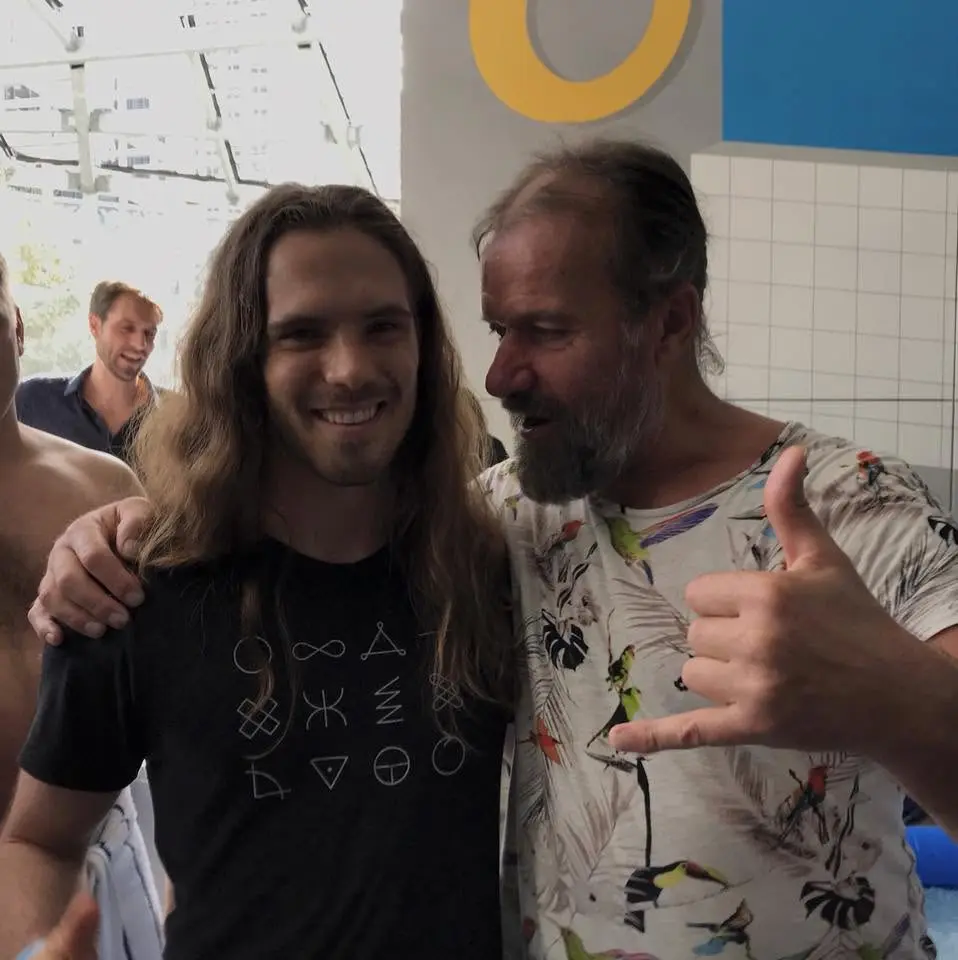
Faust Whale with Wim Hof at Summit LA 2017
At Summit LA 2017, I met Wim Hof, who holds the world record for the most world records (26)! He shared a breathing technique that allows one to consciously control one’s body, shielding it from environmental stress. Using it, I was able to hold my breath for two minutes and stay in an ice bath for three. I plan to continue practicing Tummo and pushing what is possible.
Gathering
Encounter
Journey
Ritual
Discovery
Celebration

Working on a consequential question?

Start a conversation